

In this article
- How big is the MEP ELV procurement GCC package in 2026?
- Where does the MEP and ELV scope boundary fall?
- Which approvals must clear before a price is agreed?
- How do you price copper-heavy packages after the 2026 spike?
- How should a bulk buyer structure the package and its payments?
- Frequently Asked Questions
How big is the MEP ELV procurement GCC package in 2026?
Most Gulf buyers underestimate this line, and the underestimate is structural rather than careless. On a modern commercial building, mechanical, electrical and plumbing systems account for roughly 25 to 45 per cent of total construction cost. RS Means benchmarks put Class A offices at 30 to 35 per cent and healthcare facilities at 40 to 50 per cent, because clinical air handling, medical gas and redundant power are all MEP scope. In other words, the package that procurement teams historically treated as a subcontract is often the single largest cost centre on the project — larger than the structural frame.
The market context supports that weighting. The GCC contributes around USD 4.11 billion to the Middle East and Africa MEP services market, and the global MEP services market is forecast to grow from USD 169.83 billion in 2026 to USD 376.72 billion by 2034, a compound annual growth rate of about 10.5 per cent. That growth is not evenly spread. It is concentrated where the gigaproject backlog sits, which is precisely the Gulf.
The award data tells a more nuanced story than the headline growth rate. GCC contract awards fell 9.7 per cent year on year to USD 61.2 billion in Q1 2026, then came in at USD 59.4 billion in Q2 2026, with Saudi Arabia and the UAE taking roughly 85 per cent of the total between them. Underneath that flat headline, the country mix moved sharply.
| Market | Q2 2026 awards | Year-on-year | What it means for the buyer |
|---|---|---|---|
| Saudi Arabia | USD 30.0bn | +53.6% | Capacity tightening; local-content rules bite hardest here |
| UAE | USD 20.5bn | −5.4% | Softer award flow, but a pipeline near USD 550bn keeps rates firm |
| Oman | USD 5.9bn | +341.7% | Thin contractor base; expect long lead times on specialist ELV |
| Kuwait | USD 2.0bn | +49.1% | Recovering, still small — limited bulk-buying leverage |
| Qatar | USD 931m | −40.8% | Post-cycle lull; the one market where buyers hold pricing power |
The practical reading for anyone running MEP ELV procurement GCC-wide is that leverage is now regional, not national. A buyer sourcing switchgear for a Riyadh project competes with an unusually hot Saudi award book, while the same specification bought against a Doha project sits in a slack market. Where a portfolio allows consolidated buying across borders, that spread is the cheapest saving available — and it costs nothing but timing.
Where does the MEP and ELV scope boundary fall?
MEP and ELV are routinely tendered as one package and priced as though they were one trade. They are not, and the boundary is where disputes start. MEP covers mechanical — HVAC, chillers, ductwork, ventilation — plus electrical power distribution and plumbing or drainage. ELV, extra-low voltage, covers any system operating below 50V AC or 120V DC: CCTV, access control, intercom, public address, structured data cabling, building management systems and the field devices that fire detection depends on.
The reason this matters commercially is that the two halves behave completely differently as purchases. The mechanical and electrical half is dominated by commodity content — copper, steel, aluminium — where price moves with metal markets and the buyer’s job is hedging. The ELV half is dominated by proprietary systems, licensing, head-end software and integration labour, where the buyer’s job is avoiding lock-in. A single lump-sum tender that mixes the two conceals both risks at once.
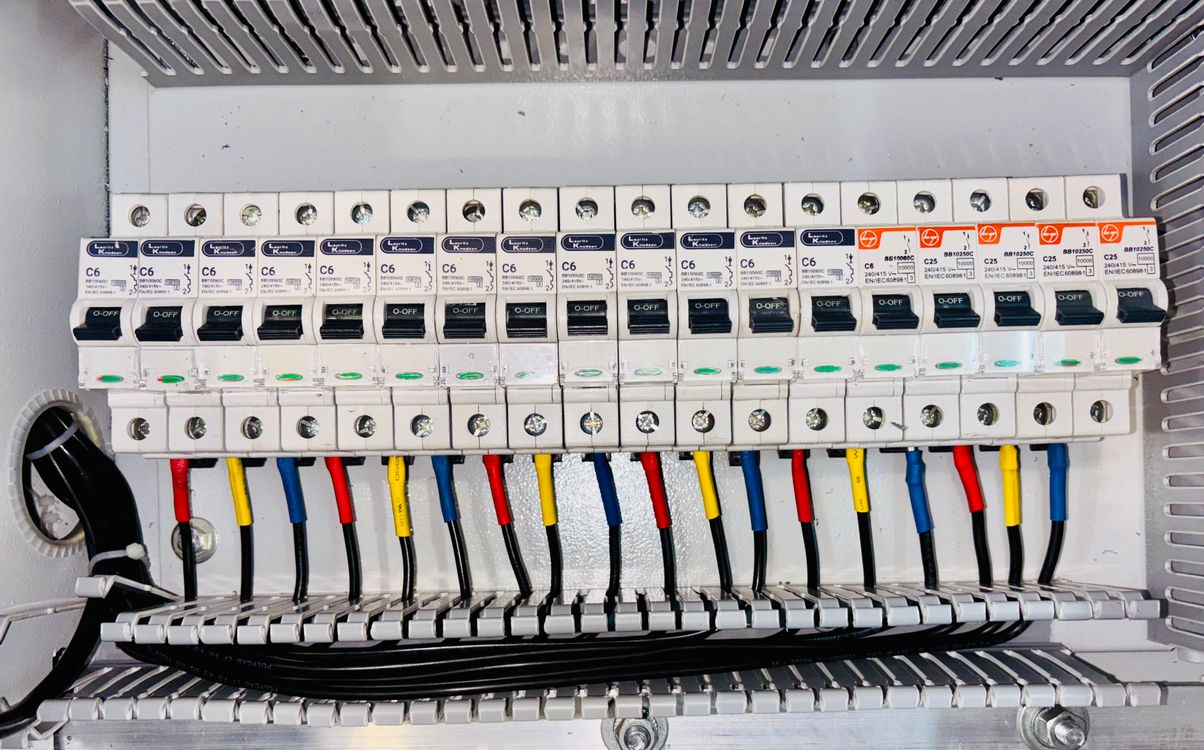
The split most experienced Gulf buyers now use is a three-way one. Bulk commodity items go to open competition on specification: cables and wiring, containment, plumbing and sanitary ware, and pumps and valves are functionally interchangeable between qualified manufacturers. Major plant — HVAC equipment, chillers, generators — goes to a shortlist, because whole-life energy cost outweighs capital price. ELV head-end and integration goes to a separate, deliberately narrow competition judged on open protocols and exit terms rather than on the lowest first-year number.
Buyers who run MEP ELV procurement GCC packages as one undifferentiated lot usually discover the cost of that at handover, when the BMS turns out to speak a proprietary protocol and every future device is a single-source purchase for the life of the building.
Comparing MEP and ELV suppliers across the Gulf?
Shortlist verified GCC manufacturers and distributors against one specification — free to use.
Find Verified SuppliersWhich approvals must clear before a price is agreed?
In the Gulf, approval status is a commercial term, not a technical afterthought. A cheaper product that is not listed cannot be installed, and discovering that after award converts a saving into a variation. Three regimes drive most of the risk.
Dubai Civil Defence and the UAE Fire and Life Safety Code. Fire detection and alarm systems must be designed and installed to UAE Civil Defence standards, and inspected and approved before occupation. The 2026 revisions tightened this considerably: mandatory local certification, product QR codes and direct Dubai Civil Defence approval, alongside 90-minute fire-resistance requirements for exit staircases and corridors. A Dubai-specific Certificate of Compliance from a DCD-authorised body is now the operative proof that a material is acceptable — a foreign test report on its own is not.
SIRA for Dubai security systems. The Security Industry Regulatory Agency governs CCTV and security installation in Dubai, and its requirements reach into the specification itself: critical facilities must retain a minimum of 31 days of video. That single clause sizes the storage array, which in turn sizes the rack, the UPS and the cooling load. Buyers who price the cameras and leave storage as a provisional sum are guaranteed a variation.
Saudi conformity and local content. Saudi Arabia assesses conformity through SASO and files it through the SABER platform, and 2026 brought further tightening of product safety and energy-efficiency regulation. Layered on top, IKTVA and the wider local-content framework push toward 70 per cent Saudi value addition, with utilities now asking for that level directly. For transformers, switchgear and cable this is steadily reshaping who can even bid. Our guide to GSO and SASO conformity certification covers the filing mechanics in detail.
| Approval | Applies to | Market | Procurement consequence |
|---|---|---|---|
| Civil Defence Certificate of Compliance | Fire detection, alarm, passive fire products | UAE | No occupancy certificate without it; verify listing pre-award |
| SIRA registration | CCTV, access control, security integration | Dubai | Installer must be SIRA-licensed; 31-day retention sizes storage |
| SASO / SABER (PCoC + SCoC) | Electrical goods, cable, switchgear | Saudi Arabia | Shipment certificate needed per consignment, not once per product |
| IKTVA local content | Power equipment, cable, transformers | Saudi Arabia | Import-only bids increasingly non-compliant on utility work |
| G-mark / GCTS registration | Low-voltage electrical products | GCC-wide | Annual GCTS renewal is missed more often than the certificate itself |
The disciplined approach is to make approval evidence a condition of bid validity rather than a condition of delivery. Ask for the certificate number and its expiry date in the tender return, then verify it against the issuing authority before award. It takes an afternoon, and it removes the most common single cause of MEP ELV procurement GCC cost overrun.
How do you price copper-heavy packages after the 2026 spike?
2026 has been an extraordinary year for copper, and the electrical half of every MEP ELV procurement GCC package carries that exposure directly. Three-month LME copper broke its all-time high on 29 January 2026 at USD 14,527.50 per tonne, and COMEX copper set an intraday record of USD 6.77 per pound on 7 August 2026. Copper wire and cable now sits roughly 83.7 per cent above its February 2020 level, and new Section 232 tariffs effective 2 April 2026 have compressed manufacturer margins further.
The mistake this produces is predictable: a buyer locks a lump sum against a quotation the supplier cannot honour, the supplier absorbs the first move, and then either seeks relief or quietly degrades the delivery. A fixed price in a volatile metal market is not risk transfer — it is risk concealment with a later invoice attached.
The workable answer is a properly drafted escalation clause. To function, it must name the specific materials it covers, state the date from which it operates, and identify the index and formula used for adjustment. Two refinements matter in Gulf practice. First, make the clause symmetrical, so a falling market returns value to the buyer — asymmetric clauses simply invite inflated base quotes. Second, set a materiality threshold, so only moves beyond a stated percentage trigger a recalculation, which keeps the administration proportionate to the sums involved.
Where the programme allows it, the stronger tool is separating the metal from the conversion. Agree the manufacturer’s conversion cost and delivery terms, then fix the copper component on the day the order is released. That converts an unpriceable risk into a scheduling decision, and it is how experienced MEP ELV procurement GCC teams have handled cable through this cycle. Our GCC construction materials procurement guide sets out the same approach for steel and cement.
How should a bulk buyer structure the package and its payments?
Scale is only an advantage when it is aggregated deliberately. The three consolidations that reliably move price are: across projects, so one cable or luminaire order covers a portfolio rather than a single plot; across the programme, so a manufacturer can schedule a production run instead of quoting spot; and across specification, so twelve near-identical variants collapse into three that any qualified maker can supply. Buyers routinely chase the third and neglect the first two, which is why bulk discounts so often disappoint — volume promised across a year of unscheduled call-offs is not volume a factory can plan against. Adjacent categories such as LED lighting and networking equipment consolidate particularly well, because most of the specification variance between makers is cosmetic.
Payment structure then decides whether the price you agreed is the price you actually get. Standard practice under FIDIC and most bespoke Gulf government contracts is 10 per cent retention withheld from each interim payment. Where the defects liability period runs 18 months past handover, a contractor may wait three years or more from commencement to recover it in full — and delayed release beyond the contractual date is common, with 12 to 24 month overruns past DLP expiry reported across the UAE market. Large UAE contractors typically run 20 to 50 active subcontractors on a major project, each with separate retention, advance recovery and milestone terms.
Pay-when-paid clauses are enforceable in the UAE, though the good-faith obligation under Article 246 of the Civil Code limits how far they can be pushed in practice. The point for a buyer is not to eliminate these terms but to price them honestly. A supplier financing three months of work to reach an MEP rough-in milestone worth 15 per cent of the package is lending you money, and that cost sits inside the rate whether or not anyone names it. Shortening the milestone ladder, releasing retention against a bank guarantee, or paying for materials on delivery to site rather than on installation will frequently buy a larger discount than another round of price haggling — because it costs the buyer considerably less than it saves the supplier.
Finally, write the interfaces down. On a MEP ELV procurement GCC package, the recurring dispute is not about equipment at all; it is about who pulls containment for the ELV contractor, who provides small power for the BMS panel, and who owns commissioning when the fire alarm has to talk to the access control system. Naming those five or six interfaces in the scope matrix before award prevents the majority of variations that otherwise surface in the last eight weeks of a programme.
Frequently Asked Questions
What is the difference between MEP and ELV in a GCC tender?
MEP covers mechanical, electrical and plumbing: HVAC and chillers, ductwork, power distribution, drainage and sanitary. ELV means extra-low voltage, which is any system operating below 50V AC or 120V DC - CCTV, access control, intercom, public address, structured data cabling, building management systems and the field devices that fire detection relies on. They are usually tendered together, and that is where the trouble starts, because they behave as completely different purchases. The MEP side is commodity-driven and moves with copper, steel and aluminium, so the buyer’s job is hedging. The ELV side is proprietary, carrying licensing, head-end software and integration labour, so the buyer’s job is avoiding lock-in. Treat MEP ELV procurement GCC packages as one lot priced on a single lump sum and you conceal both risks simultaneously.
What share of construction cost does the MEP package usually take?
Between 25 and 45 per cent of total cost on a modern commercial building, which makes it commonly the largest single cost centre on the project - frequently larger than the structural frame. RS Means benchmarks narrow that further by asset class: 30 to 35 per cent on Class A office buildings and 40 to 50 per cent on healthcare facilities, where clinical air handling, medical gas and redundant power all fall inside MEP scope. Two implications follow for the buyer. First, a one per cent saving here outweighs a five per cent saving on most other packages, so MEP ELV procurement GCC deserves proportionate attention early. Second, because the range is so wide, an allowance carried as a percentage of build cost is not a budget - it is a placeholder that needs replacing with a priced specification before commitment.
Which approvals must an MEP or ELV product hold before it can be installed?
It depends on the emirate and the system, and approval status is a commercial term rather than a technical detail. In the UAE, fire detection and alarm equipment must meet UAE Civil Defence standards and pass inspection before occupation, and the 2026 code revisions added mandatory local certification, product QR codes and direct Dubai Civil Defence approval, plus 90-minute fire-resistance requirements for exit staircases and corridors. In Dubai, CCTV and security installation falls under SIRA, whose rules reach into the specification - critical facilities must retain at least 31 days of video. In Saudi Arabia, conformity is assessed by SASO and filed through SABER, with a shipment certificate required per consignment. Verify certificate numbers and expiry dates at bid stage; a product that is not listed cannot be installed, and finding that out after award turns a saving into a variation. Verification is the cheapest control available in MEP ELV procurement GCC work.
How should copper price volatility be handled in a 2026 cable contract?
With an escalation clause, or by separating the metal from the conversion - not with a fixed lump sum. The exposure is real: three-month LME copper set an all-time high of USD 14,527.50 per tonne on 29 January 2026, COMEX copper hit an intraday record of USD 6.77 per pound on 7 August 2026, copper wire and cable now sits around 83.7 per cent above its February 2020 level, and Section 232 tariffs effective 2 April 2026 compressed manufacturer margins further. A workable escalation clause names the specific materials covered, states the date it operates from, and identifies the index and formula. Make it symmetrical so a falling market returns value to you, and set a materiality threshold so small moves do not trigger administration. On any copper-heavy MEP ELV procurement GCC scope, that clause is the difference between a priced risk and a hidden one. The stronger option, where the programme allows, is to agree conversion cost separately and fix the copper component on the day the order is released.
Does bulk buying actually reduce MEP and ELV package prices?
Yes, but only when the volume is aggregated in a form a factory can plan against. Three consolidations move price: across projects, so one order covers a portfolio rather than a single plot; across the programme, so a manufacturer can schedule a production run instead of quoting spot; and across specification, so a dozen near-identical variants collapse into three that any qualified maker can supply. Most MEP ELV procurement GCC buyers pursue the third and neglect the first two, which is why promised bulk discounts so often disappoint - volume spread across a year of unscheduled call-offs is not volume a production planner can use. Commodity categories consolidate best; proprietary ELV head-end equipment barely consolidates at all, because there is no genuine competition once the protocol is fixed.
Why do payment terms matter as much as the headline price?
Because the supplier prices your payment terms into the rate whether or not anyone discusses them. Standard practice under FIDIC and most bespoke Gulf government contracts is 10 per cent retention withheld from each interim payment, and where the defects liability period runs 18 months past handover a contractor can wait three years or more from commencement to recover it - with delayed release beyond the contractual date common, and overruns of 12 to 24 months past DLP expiry reported across the UAE market. Large UAE contractors typically manage 20 to 50 active subcontractors per major project, each on separate terms. Pay-when-paid clauses are enforceable in the UAE, subject to the good-faith obligation under Article 246 of the Civil Code. Shortening the milestone ladder, releasing retention against a bank guarantee, or paying for materials on delivery to site will often buy a bigger discount on a MEP ELV procurement GCC package than another round of haggling, because it costs the buyer far less than it saves the supplier.
Conclusion
The MEP and ELV package is where Gulf construction budgets are won or lost, and it rewards a different discipline from the rest of the bill. Size it honestly rather than carrying a percentage allowance; split it so commodity items compete on specification while proprietary ELV is judged on protocols and exit terms; verify every approval number before award instead of at delivery; refuse a fixed lump sum on copper-heavy scope and use a symmetrical escalation clause or a separated metal price instead; and aggregate volume in a shape a factory can actually schedule. Then price the payment terms as deliberately as the rates, because retention held for three years is a financing cost the supplier has already built into the number. Handled that way, MEP ELV procurement GCC work stops being the package that absorbs the contingency and becomes the one that funds it. Buyers who want to shorten the qualification stage can compare GCC manufacturers and distributors on ibaadu and put a single specification in front of several of them at once.