Safety Equipment & PPE Wholesale Suppliers UAE GCC B2B 2026: A Procurement Guide
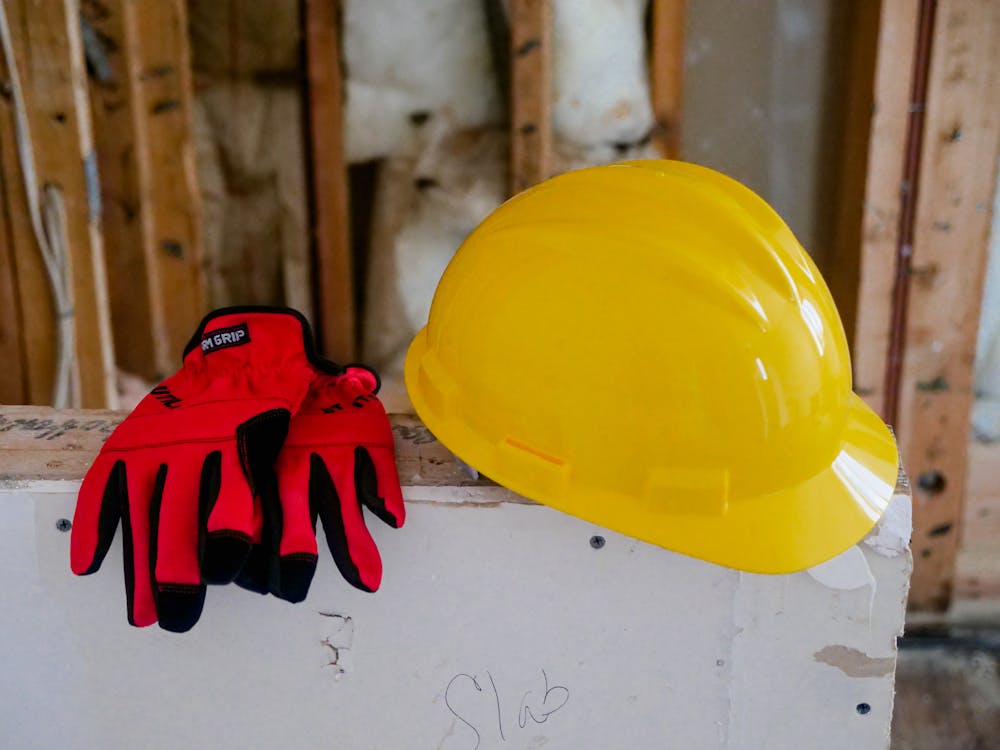
The UAE personal protective equipment market is valued at USD 702 million in 2026, growing at a 7.3% CAGR against a backdrop of one of the most active construction pipelines in the world — projects tied to Dubai's Urban Master Plan, Abu Dhabi's economic diversification, and Saudi Arabia's Vision 2030 giga-projects that source a significant share of their safety supply chain from UAE-based distributors. For B2B procurement teams and HSE managers, this means both strong supplier availability and real pressure: Dubai Law No. 7 of 2025 (effective January 2026) tightened contractor registration requirements that now include documented PPE provision, making compliance no longer optional paperwork.
This guide covers what to buy, where to source it wholesale in the UAE, what certifications to insist on, and how to check a supplier before you commit to a bulk order.
Why the GCC PPE Market Is Structurally Different from Europe or Asia
The GCC construction safety equipment market is valued at USD 1.2 billion, with UAE and Saudi Arabia accounting for an estimated 70–80% of regional value (Frost & Sullivan). What makes the GCC distinct as a procurement market is the concentration of demand: large infrastructure developers — government-linked or listed entities running multi-year project pipelines — buy safety equipment in bulk on annual or project-based contracts, creating a B2B wholesale channel that runs parallel to (and largely separate from) the retail market that smaller contractors access.
A second structural factor is workforce scale. The UAE hosts roughly 3.5 million construction and industrial workers, the vast majority on employer-provided accommodation and employer-issued PPE. This is not a market where individual workers buy their own hard hats — it is a B2B procurement market almost by definition, driven by contracts with construction companies, oil and gas operators, facility management firms, and logistics operators. Understanding that dynamic helps when negotiating with suppliers: volume and repeat-order reliability matter far more to a UAE PPE distributor than the ability to place a single large order.
The summer heat dimension also shapes procurement. The UAE's 2025 Occupational Heat Stress Prevention Policy bans outdoor work between 12:30 pm and 3:00 pm from June through September. This has created rising demand for lightweight, breathable PPE variants — cooling hard hat liners, moisture-wicking hi-vis vests, and ventilated safety footwear — that were niche products three years ago and are now mainstream procurement requirements for any project running through summer.
Mandatory PPE Categories Under UAE and GCC Regulations
MOHRE (Ministry of Human Resources and Emiratisation) sets the national floor for occupational safety requirements, applicable across all seven emirates. Its inspections are now data-driven — failure to maintain PPE records for an entire workforce on a single site visit can trigger a Grade A violation. The mandatory categories for construction and industrial workers are:
Head Protection
Hard hats certified to EN 397 (European) or ANSI/ISEA Z89.1 (US) are the baseline. For electrical work, Class E (electrical) certification is additionally required. Practically all large UAE projects specify EN 397 in their method statements; some government projects in Abu Dhabi additionally require ESMA product registration. Hard hats have a defined service life — typically five years from manufacture, not from first use — and responsible wholesale buyers track batch dates. Avoid any supplier who cannot provide batch certificates or manufacture dates on request.
Foot Protection
Safety footwear certified to EN ISO 20345 is the standard specification. The rating tiers matter: S1 (basic, no water resistance) for dry indoor environments; S2 (water-resistant upper) for general construction; S3 (water-resistant + puncture-resistant midsole) for sites with ground-level hazards. In the UAE, where construction sites routinely have rebar and sharp debris at ground level, S3 is the practical minimum and what most large project specifications require. Heat-resistant soles (HRO rating) are advisable for roofing, waterproofing, and asphalt works given surface temperatures that routinely exceed 60°C in summer.
Hand Protection
Gloves are high-consumable, high-replacement-rate items — a large site will go through thousands of pairs per month. The EN 388 standard covers mechanical hazard gloves (cut resistance, abrasion, tear, puncture), which covers general construction needs. Chemical-resistant gloves (EN ISO 374) are required where workers handle sealants, adhesives, solvents, or cleaning agents. Cut-resistant gloves rated EN 388 Level D or above are increasingly specified for glazing, steel fixing, and precast concrete works. Buying gloves on price alone without checking the EN 388 rating is a compliance risk and a false economy — a worker with a cut hand stops work.
High-Visibility Clothing
Reflective vests and garments certified to EN ISO 20471 are mandatory on all road-adjacent sites and any site with vehicle movement. Class 2 (minimum 0.5 m² fluorescent background material + retroreflective tape) covers most construction applications; Class 3 is required where workers are closer than 25 metres to live traffic. In the UAE, hi-vis is also required during nighttime operations, which are common given the summer daytime work ban. Lightweight, breathable hi-vis garments in polyester mesh are significantly more comfortable in 40°C+ conditions than the heavier woven versions and command a modest price premium that most serious procurement teams now consider justified.
Fall Protection
Full-body harnesses (EN 361), lanyards (EN 354), and energy absorbers (EN 355) are mandatory for all work at height above two metres. Fall protection is the highest-stakes PPE category from a liability standpoint — falls from height consistently rank as the leading cause of fatalities on UAE construction sites. This is emphatically not the category to source from the cheapest available supplier. Insist on: EN 363 system certification (the harness-lanyard combination as a system, not just individual components), batch traceability, and documented inspection cycles. Major distributors in JAFZA — including Honeywell Safety and KARAM Safety (based in Jebel Ali) — maintain full documentation chains for their fall protection ranges.
Respiratory Protection
Disposable FFP2 and FFP3 masks (EN 149) are the standard specification for dust and particulate protection on demolition, concrete cutting, and drilling works. Half-face and full-face respirators with cartridge filters (EN 140, EN 136) are required for chemical vapours, paint spraying, and confined-space work. Post-pandemic, the UAE market is well-stocked with disposable masks across a wide quality range — but counterfeit CE markings on disposable respirators are a documented problem in the region. Buy from verified distributors with test-report access, not from the cheapest trader in the Deira wholesale district.
UAE PPE Wholesale Supply Chain: Where to Source
The UAE PPE wholesale market operates through several distinct tiers, and understanding which tier to engage determines your pricing, MOQ requirements, and compliance documentation access.
| Supplier Tier | Location | Best For | MOQ Range | Notes |
|---|---|---|---|---|
| Brand-authorised distributor | JAFZA; Abu Dhabi ICAD | Full certification documentation; large project contracts; fall protection and respiratory PPE | AED 5,000–20,000+ per order | 3M, Honeywell, DuPont, MSA Safety, KARAM Safety. Ask for distributor authorisation letter from brand principal. |
| Mid-tier regional distributor | Al Quoz; Sharjah Industrial Area | Hard hats, gloves, hi-vis, safety shoes at competitive volume pricing | AED 2,000–8,000 per order | Typically stock mixed brands including regional manufacturers from India and China. Request EN certification copies per product. |
| Workwear specialist | Sharjah Industrial Area; Al Quoz | Customised hi-vis garments, coveralls, safety boots — company-logo workwear | 200–500 pieces per SKU; better pricing above 1,000 pieces | Gulf Uniforms and SAMS Solutions are established names. Lead time 3–6 weeks for customised orders. |
| Bazaar / spot trader | Deira; Bur Dubai wholesale streets | Fast replenishment of consumables (gloves, masks, vests); low MOQ | AED 500–2,000; no minimum per item | Price-competitive but documentation limited. Suitable for lower-risk consumables; not recommended for fall protection or respiratory PPE. |
| Direct import (China / India) | Via Jebel Ali port; online B2B platforms | Custom-branded workwear; high volume commodity PPE | 1,000–5,000 units per SKU; container-level orders for best pricing | Lead time 45–90 days. Requires pre-shipment quality inspection. Factory audit recommended for harnesses and helmets. |
For GCC construction procurement teams managing multi-site operations, the most efficient model is typically a hybrid: brand-authorised distributor for fall protection and respiratory PPE (where compliance documentation is non-negotiable), mid-tier regional distributor for hard hats, gloves, and hi-vis (where volume pricing matters), and a direct-import workwear contract for custom coveralls and boots at scale.
Source Verified B2B Safety Equipment Suppliers on ibaadu.com
Browse registered wholesale PPE and safety gear suppliers with confirmed UAE trade licences and product certification documentation. Explore ibaadu.com →
What Certifications to Demand — and What to Watch Out For
The GCC safety equipment market has a counterfeit and substandard-product problem that is not well-publicised but is well-known to experienced HSE managers. Helmets with moulded-in CE marks but no actual test certificates, harnesses that meet EN 361 visually but fail the tensile strength test, FFP2 masks with forged markings — all of these circulate in the low-price tier of the UAE wholesale market. For any PPE that stands between a worker and a life-threatening hazard, the verification steps below are not optional.
Request the Declaration of Conformity (DoC) for every product: this is the manufacturer's signed declaration that the product meets the specified standard. A DoC is not the same as a test certificate — also request the third-party test report from a notified body (for EN standards, the notified body number appears on the DoC). For helmets, this typically means a test report from a body like SGS, Bureau Veritas, or TÜV. For fall protection, the notified body certification is mandatory — products can only carry the CE mark for PPE if independently certified.
Cross-reference the model numbers on the test certificate against the products physically in stock. A distributor who cannot produce matching documentation is a distributor who cannot be trusted with safety-critical supply. For a deeper guide to pre-order supplier verification in the UAE market, see our UAE wholesale supplier verification checklist.
Cost Benchmarks for B2B PPE Procurement in the UAE (2026)
The figures below reflect mid-tier distributor pricing for EN-certified products in the UAE market as of mid-2026. Brand-authorised distributor pricing runs 15–30% higher; bazaar pricing runs 20–40% lower with correspondingly weaker documentation.
- Hard hats (EN 397, standard): AED 18–35 per unit at 100+ pieces; AED 12–22 per unit above 500 pieces.
- Safety gloves (EN 388, general purpose): AED 8–18 per pair at 100 pairs; AED 5–11 per pair above 500 pairs.
- High-visibility vest (EN ISO 20471 Class 2): AED 15–30 per unit at 100 pieces; AED 10–20 per unit above 500 pieces.
- Safety footwear (EN ISO 20345 S3): AED 65–140 per pair depending on brand and specification.
- Full-body harness (EN 361, standard): AED 180–380 per unit from a mid-tier distributor; AED 350–650+ for branded fall protection from an authorised distributor.
- FFP2 disposable mask (EN 149): AED 2–4 per mask at 50-box quantities; AED 1.50–2.80 per mask on pallet orders.
- Coveralls / boiler suits (basic, unbranded): AED 25–55 per unit; custom-branded with logo: AED 45–90 per unit depending on quality and MOQ.
These benchmarks are useful for budget planning and for identifying outliers — a helmet at AED 8 or a harness at AED 90 from an unfamiliar supplier should prompt immediate documentation requests before any order is placed. The wider context of UAE's $49 billion industrial procurement environment drives significant demand for safety equipment across oil and gas, manufacturing, and utilities — sectors where per-unit pricing is often secondary to certification compliance and on-time delivery reliability.
Frequently Asked Questions
What PPE is mandatory on UAE construction sites in 2026?
MOHRE and emirate-level HSE regulations require all workers on UAE construction sites to wear hard hats (EN 397 or ANSI Z89.1), steel-toecap safety footwear (EN ISO 20345), high-visibility reflective vests (EN ISO 20471 Class 2+), and task-appropriate gloves. For work at height above two metres, a full-body harness and approved lanyard are additionally mandatory. Dubai Law No. 7 of 2025, effective January 2026, requires contractors to document PPE provision to their entire workforce as part of their registration profile.
Where can B2B buyers source PPE wholesale in the UAE?
The four main UAE PPE wholesale sourcing hubs are: (1) Jebel Ali Free Zone (JAFZA) — authorised distributors of global brands including 3M, Honeywell, DuPont, and KARAM Safety; (2) Al Quoz Industrial Area, Dubai — industrial traders with competitive volume pricing on hard hats, gloves, and workwear; (3) Sharjah Industrial Area — typically 10–15% cheaper than comparable Dubai traders for workwear and footwear; (4) Deira wholesale district, Dubai — suited to small-order replenishment of consumables. The ibaadu.com marketplace lists verified B2B suppliers across all four hubs.
What are typical minimum order quantities for PPE wholesale in the UAE?
Fast-moving consumables (gloves, masks, vests): AED 500–2,000 minimum from spot traders; AED 3,000–8,000 from mid-tier distributors. Customised branded workwear: 200–500 pieces per SKU. Direct-import orders from China or India: 1,000–5,000 pieces per SKU for competitive pricing, with 45–90 days lead time.
Do UAE PPE suppliers need to meet specific certification standards?
Yes. UAE and GCC project specifications require EN (European) or ANSI (US) certifications. Key standards: hard hats — EN 397; safety footwear — EN ISO 20345; hi-vis garments — EN ISO 20471; harnesses — EN 361 + EN 363. ESMA has adopted many EN standards as UAE national standards. Always request the Declaration of Conformity and the notified-body test report — not just a CE marking — for safety-critical categories.
How do I verify a UAE PPE wholesale supplier before placing a bulk order?
Four steps: (1) Confirm the UAE trade licence covers safety equipment trading — check the DED or JAFZA directory; (2) Request test certificates and Declarations of Conformity for every product category you intend to order; (3) For branded PPE, request the manufacturer's authorisation letter confirming distributor status; (4) Call reference contacts at two or three existing construction company clients. The ibaadu.com marketplace applies trade licence verification to all listed suppliers, covering step 1 automatically. For a full due-diligence checklist, see our UAE wholesale supplier verification guide.
Join ibaadu.com — Connect with Verified B2B Safety Equipment Suppliers
Procurement teams and HSE managers across the GCC use ibaadu.com to source PPE, workwear, and industrial safety equipment from suppliers with confirmed trade licences and product certification. Join ibaadu.com →