Industrial Gases & Welding Supplies Wholesale Suppliers in the UAE & GCC — 2026 B2B Guide
The GCC industrial gas market stands at USD 2.8 billion in 2026 and is on track to reach USD 4.8 billion by 2035 (CAGR 6.2%). The UAE alone accounts for roughly 30% of that — making it the region's single largest sourcing hub for compressed gases, cryogenic liquids, and the welding consumables that go alongside them. Procurement managers in fabrication, oil and gas MRO, healthcare, and construction are all sourcing from the same UAE wholesale corridor, primarily Jebel Ali and Hamriyah Free Zones. This guide cuts through the noise: who the real stockist suppliers are, what MOQs and pricing look like, and how to write an RFQ that gets you a usable quote on the first pass.
Market Overview: Why This Category Is Growing
Two converging forces are pushing industrial gas demand across the GCC in 2026. The first is the construction wave — the UAE alone has over AED 250 billion in active projects, each of which requires cutting, welding, and surface preparation gases at every stage of steel fabrication and mechanical installation. The second is the energy transition: as solar, hydrogen, and nuclear projects scale up across Saudi Arabia, Qatar, and the UAE, the demand for specialty shielding gases (argon, helium blends) and high-purity hydrogen is growing at a faster clip than the overall market.
On the welding consumables side, the GCC market was valued at USD 685.4 million in 2026 and is projected to reach USD 1.14 billion by 2035 (CAGR 5.80%). The majority of that volume flows through UAE free zone distributors who import from Germany, Japan, South Korea, India, and China and break bulk for GCC-wide distribution.
For B2B procurement teams, the structural advantage of sourcing through the UAE is clear: duty-free storage in JAFZA or Hamriyah, fast regional re-export to Saudi Arabia, Qatar, Kuwait, and Oman, and a dense cluster of certified stockists operating under UAE Ministry of Economy and Emirates Authority for Standardization (ESMA) oversight. See our GCC construction procurement guide for context on how gas and consumables procurement sits within the broader materials sourcing stack.
Gas Types and Welding Consumables B2B Buyers Source
Cylinder and Bulk Gases
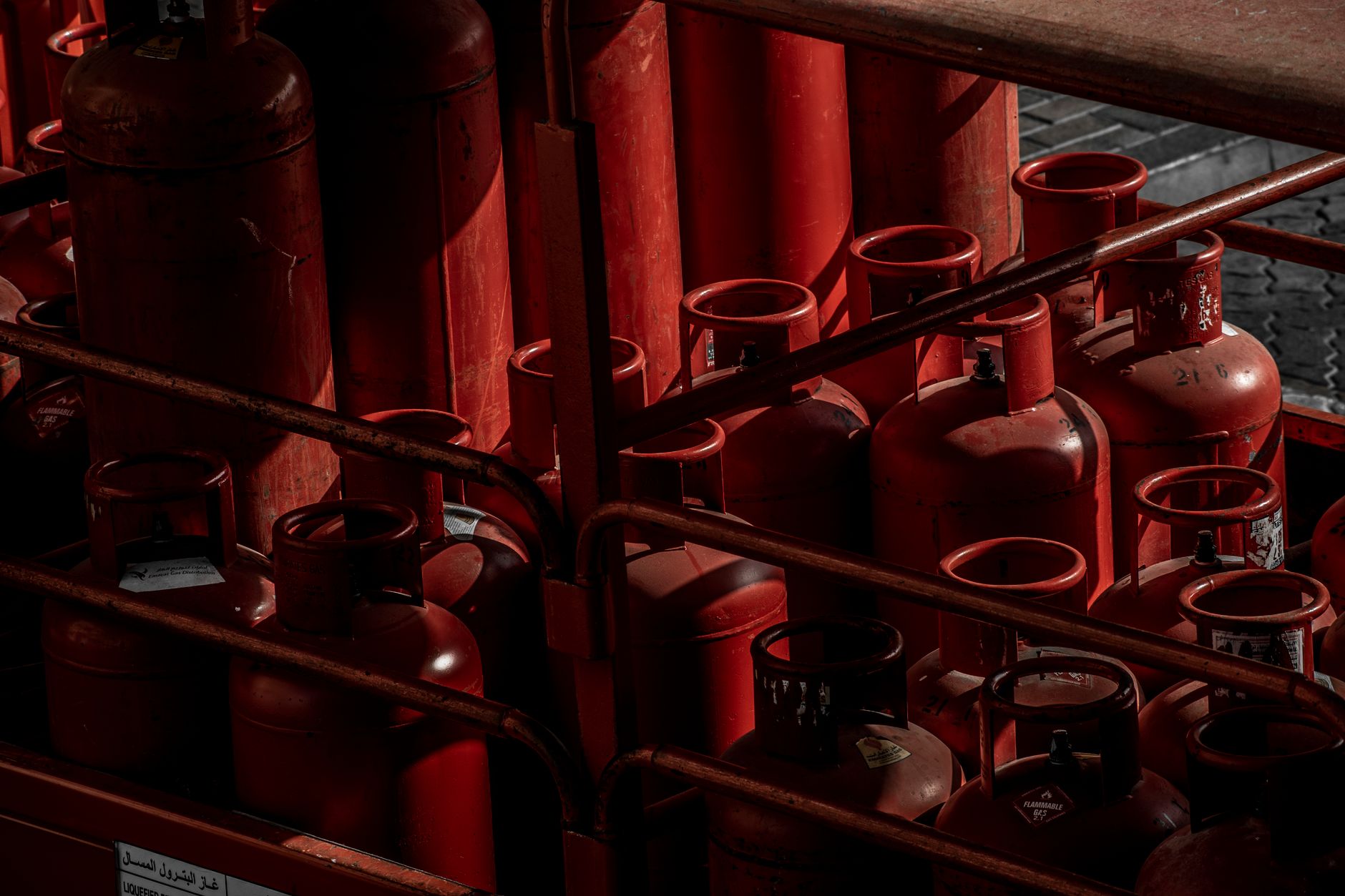
The core gases that B2B buyers in the UAE and GCC source wholesale break into three categories. Process gases — oxygen, nitrogen, argon, carbon dioxide, acetylene — cover the bulk of fabrication, cutting, and purging demand. Specialty shielding gases — argon-CO₂ blends (C25 for MIG), tri-mix, helium blends for TIG on exotic alloys — are increasingly specified on oil-and-gas and aerospace-adjacent projects. Healthcare and food-grade gases — medical oxygen, nitrous oxide, nitrogen for food packaging — require separate supply chains with pharma-grade purity certificates.
Delivery format matters as much as gas type. Cylinder supply (high-pressure steel or composite cylinders) suits jobsite and workshop operations with moderate consumption. Bulk liquid supply (cryogenic ISO tankers or on-site micro-bulk systems) is cost-effective once consumption crosses roughly 50 cylinders per week — the crossover point where a liquid storage vessel and vaporiser pays back within 12–18 months at UAE prices.
Welding Consumables
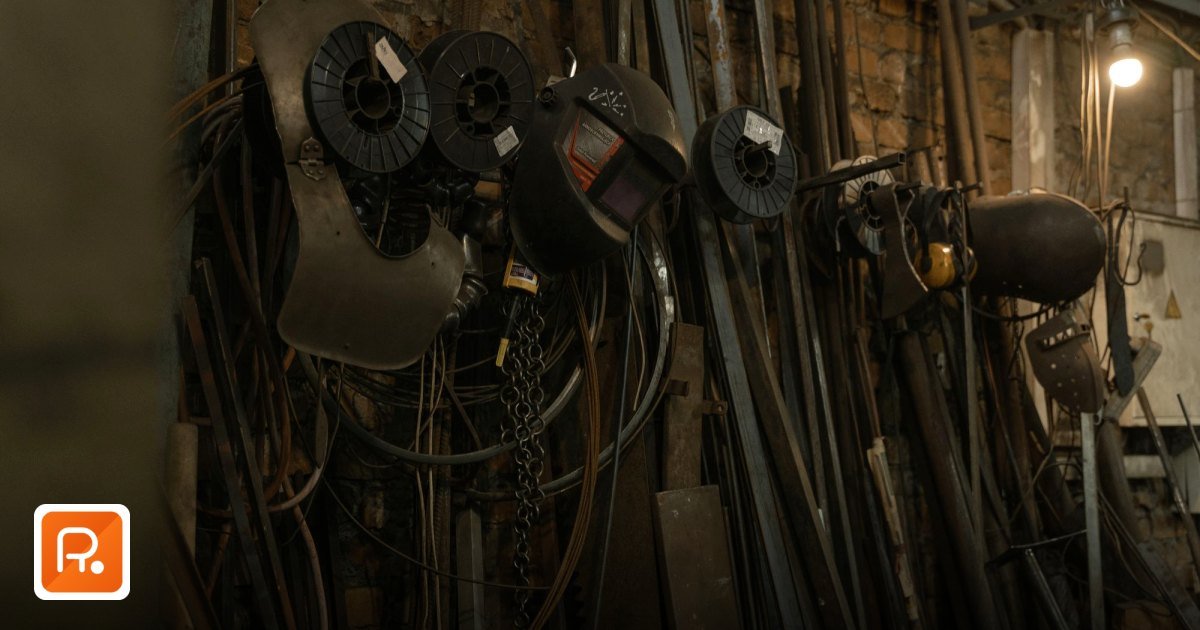
The wholesale consumables market in the UAE clusters around four product families. MIG/MAG wire — ER70S-6 for carbon steel is the highest-volume SKU; ER308L, ER316L for stainless. TIG rods — ER4043 for aluminium, ER309L for dissimilar metal joins. SMAW (stick) electrodes — E6013 and E7018 dominate general fabrication; E309-16 for cladding. Flux-cored wire (FCAW) — increasingly specified on large structural steel jobs and shipbuilding because it combines MIG productivity with SMAW penetration on heavy sections.
Procurement teams should specify wire diameter (0.8 mm, 1.0 mm, 1.2 mm for MIG; 2.4 mm, 3.2 mm for TIG rods), spool size (5 kg, 15 kg, 250 kg drum), and certification standard (AWS A5-series, EN ISO 14341) in every RFQ. Missing these details produces quotes that are impossible to compare across suppliers. Our PRQ/RFQ guide for bulk sourcing in the Middle East covers the full RFQ structure in detail.
Key Wholesale Suppliers & Distributors in the UAE
The UAE industrial gas and welding wholesale market is more consolidated at the top than most procurement managers expect. Four or five names handle the majority of B2B volume, with a longer tail of trading companies below them.
Linde Gas UAE (Jebel Ali Free Zone) is the dominant integrated supplier — producing gases locally and distributing cylinder, bulk liquid, and on-site generation solutions across the GCC. For large-volume buyers, Linde offers supply agreements with index-linked pricing and logistics management. Their welding gas portfolio covers standard and specialty mixes; equipment rental (regulators, manifolds) is bundled into term contracts.
Kanoo Machinery (JAFZA) is the region's most established welding equipment and consumables distributor, with ready stock at Jebel Ali. They carry Hyundai Welding consumables, FSH Welding Group (Selectarc), TBI Industries Germany MIG guns and TIG torches, and Panasonic welding robots. Kanoo's strength is breadth — a single PO can cover gases, machines, consumables, and PPE.
Tee Dee International FZE (JAFZA South) specialises in welding and cutting consumables: MIG/TIG torches, regulators, gas-cutting torches, electrodes, and accessories. They supply oil-and-gas contractors and shipbuilders across the GCC, with stock depth that supports project call-offs on short notice.
ABN International FZCO (Jebel Ali Free Zone) focuses on welding consumables for heavy industry — MIG wires, submerged arc wire and fluxes, TIG rods — with a client base of major oil-and-gas EPC contractors and shipbuilders. ABN's value proposition is certified traceability: heat/lot test certificates, mill certs, and third-party inspection are standard on all consignments.
For Air Products and Air Liquide Gulf, procurement teams in the UAE typically engage through local agents or directly via the companies' Gulf regional offices in Dubai and Abu Dhabi. Both operate bulk liquid supply agreements for large industrial consumers but do not typically wholesale cylinders through open B2B channels — they are better suited to on-site generation or liquid bulk contracts above 20 tonnes per month.
Before committing to any of these suppliers, run them through the verification checklist in our UAE wholesale supplier verification guide — licence status, trade register, civil defence approvals for hazardous goods storage, and ESMA conformity marks all need checking before a first order.
How to Structure Your RFQ for Industrial Gas and Welding Procurement
A well-formed RFQ for this category should include six elements that most buying teams either skip or leave vague. First, gas specification: purity grade (industrial, scientific, medical), cylinder size (T-size, D-size, etc.) or bulk volume in litres or cubic metres. Second, delivery format: cylinder rental vs. customer-owned cylinders, or bulk liquid with tanker schedule. Third, certification requirements: ESMA conformity, ADNOC/ARAMCO approval, medical licence if applicable. Fourth, volume and call-off structure: total annual volume plus maximum single delivery quantity and frequency. Fifth, site conditions: delivery address (free zone, onshore, offshore), storage available, access constraints. Sixth, commercial terms: payment (LC, TT, credit), Incoterms (DDP vs. DAP), warranty on cylinders and equipment.
For welding consumables, the same logic applies but add wire grade and certification standard (AWS vs. EN) as mandatory fields. Requests for 'welding wire' without a grade, diameter, and spool format will receive guesswork quotes. See how industrial chemical and lubricant procurement in the UAE handles similar specification complexity — the RFQ discipline transfers directly.
MOQ, Pricing & Lead Times
For cylinder gases sourced from UAE stockholders, the practical minimum is 10–20 cylinders per order for standard gases and 5 cylinders for specialty mixes. Bulk liquid gas delivery typically starts at 1 tonne (roughly 800 litres of liquid oxygen or nitrogen), with cryogenic tanker schedules every 2–4 weeks for medium-sized consumers. Procurement teams running below these thresholds usually pay a surcharge or consolidate orders with a local trading intermediary.
Pricing for industrial gases in the UAE is generally not published — you will need to request quotations. However, the market is competitive enough that three RFQs across the major suppliers will produce usable benchmark data. Bulk discounts of 5–15% are standard above USD 10,000 per order. For welding consumables, MIG wire (ER70S-6, 15 kg spool) from Chinese origin trades at approximately USD 2.80–3.40 per kg ex-JAFZA; from Korean or European suppliers, USD 4.20–6.00 per kg with corresponding quality and certification premium.
Lead times from in-country stock are 1–3 business days for standard cylinder gases and 3–7 days for bulk liquid tanker scheduling. Imported consumables from India ship in 7–14 days; from China (Shandong and Zhejiang welding clusters) expect 20–30 days sea freight. European and Japanese product can run 4–8 weeks on non-stocked items. The UAE's CEPA agreements with India and Indonesia have been shaving 2–5 days off port clearance times for qualifying HS codes — worth factoring into total landed cost calculations. See our UAE CEPA procurement opportunities guide for HS codes and tariff schedules.
Regulatory and Certification Requirements
Industrial gases are classified as hazardous materials under UAE Federal Law No. 24 of 1999 and the subsequent Dubai Municipality Technical Guidelines. Storage facilities must hold Civil Defence approval, and cylinder storage must comply with EIGA (European Industrial Gases Association) Doc 6 standards for segregation of oxidising, flammable, and toxic gases. Acetylene requires dedicated storage separate from oxidisers; hydrogen storage carries additional risk assessment requirements.
Cylinders imported into the UAE must carry ESMA conformity marks or equivalent recognised certification (TPED for EU-origin cylinders, DOT for US-origin). All cylinder-to-regulator connections in the GCC use CGA fittings — confirm compatibility with your regulator inventory before ordering cylinders from a new supplier.
For ADNOC and Saudi Aramco projects, gas purity certificates from accredited labs and third-party inspection reports (Bureau Veritas, SGS, INTERTEK) are mandatory — not optional. Build the cost and lead time for these certificates into your procurement schedule; they add 5–10 days and USD 150–400 per batch. Projects under UAE Ministry of Industry and Advanced Technology (MoIAT) Industrial Acceleration Strategy additionally require locally manufactured content targets where available — relevant if you are procuring for a long-term manufacturing project rather than a one-off construction contract. Combining your gas and welding supply with PPE and safety equipment procurement under a single vendor agreement is a common cost-saving approach for major contractors.
Source B2B Suppliers on ibaadu — connect directly with licensed industrial gas wholesalers and welding consumable distributors across the UAE and GCC.
Find Suppliers on IbaadUFrequently Asked Questions
What is the minimum order quantity for industrial gases wholesale in the UAE?
For cylinder gases (oxygen, argon, CO₂), most UAE wholesalers require a minimum of 10–20 cylinders per order. Bulk liquid gas delivery typically starts at 1 tonne. Equipment orders (regulators, torches, consumables) commonly have a USD 1,000–2,000 minimum purchase value, with bulk discounts of 5–15% kicking in above USD 10,000.
Which free zones in the UAE are best for sourcing industrial gases wholesale?
Jebel Ali Free Zone (JAFZA) is the dominant hub — Linde Gas UAE, Kanoo Machinery, Tee Dee International FZE, and ABN International FZCO all maintain stockist operations there. Hamriyah Free Zone in Sharjah is the secondary hub, particularly for heavy industrial and petrochemical gas supply. Both offer duty-free storage and re-export advantages for GCC-wide distribution.
What customs duty applies to industrial gas cylinders and welding equipment imported into the UAE?
The UAE applies a standard 5% CIF customs duty on imported industrial gas cylinders and welding equipment. Goods sourced from CEPA partner countries (India, Indonesia, Israel, and others) may attract reduced or zero-duty rates on eligible HS codes. Check the CEPA tariff schedules before placing your import order — the savings on high-volume consumables orders can be material.
How do B2B buyers in the GCC typically purchase welding consumables in bulk?
Most procurement managers issue an RFQ specifying wire grade (ER70S-6 for MIG, E6013 for stick, etc.), diameter, spool or reel size, quantity in kg, and required certifications (AWS, EN, ARAMCO, ADNOC). Suppliers respond with a quotation covering unit price, lead time, country of origin, and test certificates. Framework contracts covering 6–12 months of supply are common among larger fabrication and oil-and-gas contractors.
What are typical lead times for bulk industrial gas orders in the UAE?
Cylinder gases from in-country stockholders are typically available within 1–3 business days. Bulk liquid gas deliveries (cryogenic tanker) are 3–7 days for standard scheduling. Imported welding consumables from India ship in 7–14 days; from China (Shandong, Zhejiang) expect 20–30 days. Equipment orders with custom specifications can take 4–8 weeks.
Are there special regulatory requirements for importing and storing industrial gases in the UAE?
Yes. Dubai Municipality (DM) and the respective emirate's civil defence authority require approved storage facilities for hazardous compressed gases. Cylinders must display EIGA-compliant labelling. Acetylene and hydrogen require segregated storage. ADNOC and ARAMCO projects additionally mandate specific gas purity certifications and third-party inspection reports. Always verify your supplier's UAE Ministry of Economy registration and Civil Defence approval before signing a supply agreement.
Join ibaadu — the B2B marketplace connecting GCC buyers with licensed wholesale suppliers across industrial gases, welding, and 40+ procurement categories.
Join IbaadU Today