In this article
- What are you actually buying when you buy fire fighting equipment?
- What does each line cost in the UAE in 2026?
- Why does the approval, not the equipment, set your programme?
- Which certificates must arrive with the goods?
- How do the emirates and the wider GCC diverge on one specification?
- What does the system commit you to after handover?
- How should the enquiry and the supply contract be written?
- Frequently Asked Questions
Most fire protection enquiries that reach a UAE distributor arrive as a shopping list. Forty extinguishers, one addressable panel, two hundred detectors, please quote. A price comes back against that list, it is compared with two others built the same way, and a supplier is appointed on a number that describes perhaps a third of what the project will cost and almost none of what determines whether it can be signed off. Fire protection is the one category on a building where the purchase is not finished when the goods are delivered and not even finished when they are installed. It is finished when a Civil Defence inspector energises the panel, triggers a detector, pressurises the pump and issues a certificate — and a great many well-priced orders never reach that point. Buyers approaching fire fighting equipment suppliers UAE distributors put forward often get a genuinely competitive rate on the cylinders and then pay for the rest twice.
This guide is written for the procurement side of that transaction: facilities managers renewing a system to keep a trade licence current, main contractors buying a fire package inside a larger fit-out, consultants building a bill of quantities, and distributors reselling into the wider Gulf. It covers what belongs on the BOQ, indicative 2026 AED bands for each line, the approval sequence that actually governs the programme, the certificates that must travel with the goods rather than follow them, how the emirates diverge on a single specification, the recurring obligation that outlives the purchase order, and how to write the enquiry so three quotations become genuinely comparable.
What are you actually buying when you buy fire fighting equipment?
A certifiable commercial fire and life safety installation in the UAE is six purchases wearing one purchase order. Separating them from the first enquiry is the single highest-leverage thing a buyer can do in this category, because it is the only way the three prices that come back describe the same scope.
Detection and alarm. The fire alarm control panel, addressable or conventional loop devices, smoke and heat detectors, manual call points, sounders and beacons, voice alarm and public address where the occupancy demands it, and the interfaces to lifts, dampers and access control. This is an extra-low-voltage package and on a fit-out it is usually bought inside the broader MEP and ELV procurement package, which is exactly where it tends to fall between the main contractor and the fire subcontractor.
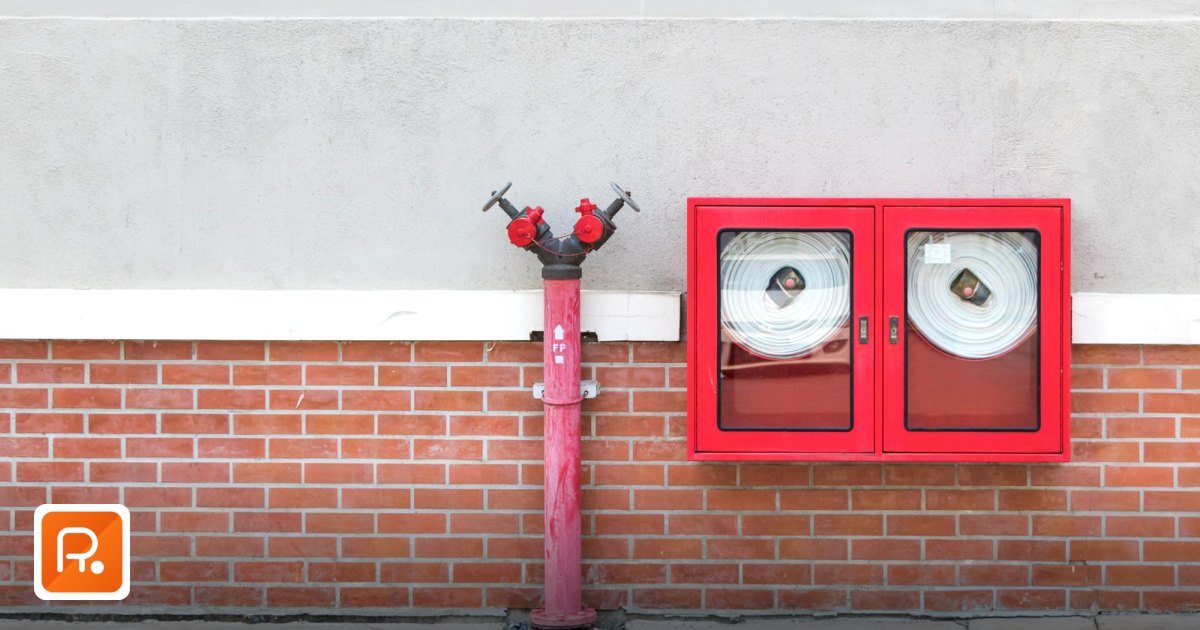
Suppression, fixed. Sprinkler heads, pipework and fittings, valve sets, flow switches and tamper switches, hose reels and landing valves, plus clean-agent or kitchen wet-chemical systems where the risk requires them. The pipework and fittings line is priced on the same fundamentals as the rest of the wet services on site, so it is worth benchmarking against the plumbing and sanitary ware sourcing guide rather than accepting it bundled at a system rate.
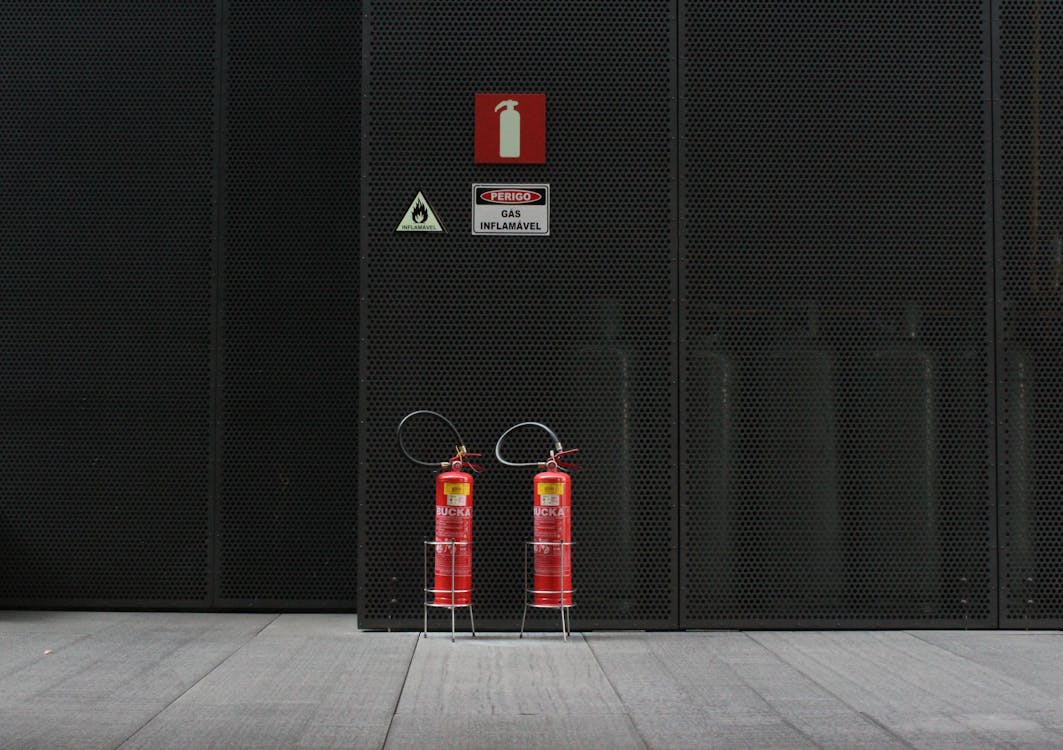
Suppression, portable. Extinguishers by class — ABC dry powder, CO2, foam, wet chemical for kitchens — with brackets, signage and the servicing history that has to accompany them. The cheapest line on the order and the one most often bought on price alone.
Pumping and water supply. The fire pump set with its jockey pump and controller, the storage tank, and the associated valves and gauges. On a building of any size this is the largest single equipment line by value and the longest lead item, and it is priced against the same hydraulic fundamentals covered in the pumps and valves wholesale guide. A listed pump set is not interchangeable with a general-service pump of the same duty, and substitution here is the most expensive way to fail an inspection.
Egress and power. Emergency and exit luminaires, central battery or self-contained units, and the fire-rated cabling and containment that has to survive long enough to matter. Fire-rated cable is a distinct product from standard building wire and prices accordingly, which the electrical materials and cables sourcing guide is useful for benchmarking separately.
Approval, commissioning and the maintenance obligation. Drawings, the submission itself, the registered contractor performing the installation, live testing at inspection, and the annual maintenance contract that keeps the certificate valid afterwards. This is not overhead. It is a priced deliverable, it is frequently the reason a project slips, and section six explains why it should be quoted before award rather than negotiated after.
The practical consequence is straightforward. An enquiry listing only devices invites every supplier to price only devices, and the comparison that follows is honest between the three quotations and meaningless against what will actually be spent. The same discipline applies here as in any regulated technical category, and the general method is set out in the UAE B2B suppliers sourcing guide: write the bill of quantities across all six lines and require each to be priced separately.
What does each line cost in the UAE in 2026?
Pricing in fire protection is unusually wide, and for a specific reason. Two products carrying the same nominal description — a 6 kg ABC extinguisher, an addressable smoke detector — can be commodity stock at one end and third-party listed product with a supported warranty and a current conformity certificate at the other. The listing and the certificate are most of the price difference, and they are also the part that determines whether the item survives inspection. The bands below are indicative UAE trade levels for 2026, quoted before VAT, and they assume commercial quantities rather than single-unit retail purchase.
| Line item | Indicative trade band (AED) | What moves it within the band |
|---|---|---|
| Extinguisher, 6 kg ABC dry powder | 55 – 180 | Cylinder origin, valve quality, listing and certification, warranty |
| Extinguisher, 5 kg CO2 | 180 – 480 | Cylinder manufacture and test standard; horn and hose assembly |
| Extinguisher, 9 L foam or wet chemical | 240 – 900 | Agent type; kitchen wet chemical carries the premium |
| Addressable smoke or heat detector | 18 – 60 | Brand tier, protocol, sensor type, whether the base is included |
| Manual call point, addressable | 25 – 95 | Resettable element, weatherproof rating, brand |
| Sounder / beacon, addressable | 45 – 210 | Output rating, combined vs single function, IP rating |
| Fire alarm control panel, addressable | 2,500 – 18,000 | Loop count, network capability, brand tier, voice alarm integration |
| Sprinkler head, pendent or upright | 12 – 45 | Response class, temperature rating, finish, listing |
| Hose reel with cabinet | 550 – 1,800 | Cabinet material and finish; reel length; landing valve inclusion |
| Electric fire pump set, listed, with jockey and controller | 22,000 – 140,000 | Duty and head, listing body, controller specification, diesel adds materially |
| Emergency / exit luminaire, maintained | 60 – 320 | Battery duration, self-test capability, certification |
| Fire-rated cable, per metre | 4 – 22 | Core count and CSA; survival rating; enhanced vs standard grade |
| Installation and commissioning, per alarm loop | 3,500 – 9,000 | Device count on the loop; building access; working at height |
| Sprinkler installation, per head | 90 – 220 | Ceiling type, pipe route length, coordination with other services |
| Drawings and approval submission support | 3,000 – 25,000 | Building complexity; number of observation rounds; consultant involvement |
Two rows repay attention more than the rest. The fire pump set is usually the largest equipment value and almost always the longest lead item, so it is the line that sets the programme rather than the budget. Order it late and no amount of speed on the devices recovers the date. It is also the line where a substitution proposed as a saving — a competent general-service pump of the same nominal duty, priced well below a listed fire pump — is not a saving at all, because it will not be accepted.
The approval submission row is the one buyers most often decline to price, on the assumption that the supplier will absorb it. Suppliers price it accordingly, which is to say they price one round of comments and raise a variation for the second and third. Ask for the submission to be quoted with a stated number of observation rounds included, and for the rate that applies beyond that. It converts a recurring dispute into a line on a page.
Get fire protection quotations you can actually compare
Submit one bill of quantities to verified UAE and GCC fire safety distributors and get every line — detection, suppression, pumping, egress, installation and annual maintenance — priced separately.
Connect with a business expert now →Why does the approval, not the equipment, set your programme?
The governing document is the UAE Fire and Life Safety Code of Practice, published in its current edition in September 2018 and administered through the Ministry of Interior and the Civil Defence authorities of the individual emirates. It is the reference used when designing, approving, installing, testing and handing over fire and life safety systems, and a design that does not satisfy it does not become compliant by being installed well.
In Dubai the approval cycle runs in four stages — drawing approval, documentation, installation and inspection, and final certificate issuance — with submissions made through the DCD e-services portal and the Company Approval Services portal under the General Command of Dubai Civil Defence. Reported timelines put initial drawing approval at 24 hours to three working days and the full cycle at 7 to 30 working days, depending on complexity and on how quickly observations are cleared. That range is wide for a reason: the first review is fast and the observation rounds are not, so on anything beyond a simple fit-out the upper end of the range is the realistic planning figure.
The documentary file is where most delay originates, and none of it is technical. A submission expects the trade licence, the building owner's no objection certificate, the affection or plot plan from the municipality, the owner's passport and Emirates ID, the Ejari or lease contract, and the trade licences of both the contractor and the consultant carrying their Civil Defence registration numbers. The technical package alongside it comprises architectural floor and key plans, the firefighting layout showing sprinklers, hose reels and extinguishers, the fire alarm layout showing detectors, call points and sounders, emergency and exit lighting layouts, the HVAC smoke control interface where one exists, and the certificates of conformity for the equipment being installed.
That last item is the procurement hinge and the reason this section belongs in a sourcing guide rather than a project management one. The certificates are a supplier deliverable. If they are not written into the purchase order they arrive late, incomplete, or expired, and the submission waits. Contractors on programme regularly discover that the item holding up a Civil Defence file is not a product but a PDF.
At inspection the testing is live rather than documentary: inspectors pressure-check pumps, activate alarm panels, trigger detectors and time emergency lighting. The recurring reasons for re-inspection are detector misplacement, missing certificates, gaps in sprinkler coverage and blocked means of escape — a list on which exactly one entry is a product problem. Clearing the observations produces the completion and fire safety certificate, which is what the licensing authority and the free zone want to see before a trade licence is released. On any project where occupancy is tied to a licence date, this certificate, not the delivery note, is the milestone that matters. Buyers sequencing a wider build around it will find the UAE construction supply chain procurement guide useful for placing it against the other long-lead approvals on the same programme.
Which certificates must arrive with the goods?
Two separate regimes apply to fire safety product entering the UAE market, and buyers routinely conflate them. One governs the product's right to be sold at all; the other governs its acceptance in a fire and life safety installation. A supplier can hold the first and not the second.
The general regime is the Emirates Conformity Assessment Scheme, ECAS, operated by the Ministry of Industry and Advanced Technology — the ministry into which the former Emirates Authority for Standardization and Metrology was merged in 2020 — under the authority of Federal Law 28 of 2001. The trader, importer or manufacturer must hold a valid Certificate of Conformity for each regulated product, demonstrating compliance with MOIAT technical regulations and standards. It is a pre-market requirement, which is the operative point for anyone importing: without it the goods do not clear customs and cannot lawfully be listed for sale. Notified bodies appointed by MOIAT issue the certificate on the ministry's behalf. The mechanics of this scheme and how it relates to Gulf-wide marking are covered in more depth in the GSO and SASO conformity certification guide.
The fire-specific regime sits alongside it. Fire and life safety products falling under the UAE Fire and Life Safety Code scheme require a certificate of compliance issued by an officially recognised certification body, and certification is mandatory with market surveillance in place. The scheme's covered categories include emergency lighting and exit luminaires, smoke alarm devices, control and indicating equipment, sounders and voice alarm systems, manual call points and visual alarm devices, power supply and transmission equipment, and radio-linked components. Certificates issued under it are valid for two years, sample testing is conditionally required, and factory inspection is not mandated.
| Document | What it proves | When it must exist | Who holds it |
|---|---|---|---|
| ECAS Certificate of Conformity (MOIAT) | The product may lawfully be imported and sold in the UAE | Before customs clearance — pre-market | Importer, trader or manufacturer |
| Fire and life safety certificate of compliance | The product is accepted in a Civil Defence approved installation | At submission, and valid on the day of inspection | Supplier, passed to the submission file |
| Third-party product listing (UL, FM, EN/CE as applicable) | The product performs to a recognised fire standard | At specification stage — it drives the price band | Manufacturer |
| Contractor Civil Defence registration | The installer is permitted to install and certify | Before installation begins | Installing contractor |
| Completion and fire safety certificate | The installation passed inspection | At handover, before licence release | Building owner or occupier |
Three practical rules follow. First, ask for the certificate number and its expiry date rather than an assurance of approval; a two-year validity means certificates expire quietly between the quotation and the inspection, and an expired certificate is treated as an absent one. Second, confirm that the certificate covers the exact model and variant being supplied, because ranges are certified by specific reference and a substituted variant within the same family is a common and entirely avoidable failure. Third, put certificate delivery in the purchase order as a condition of payment against the relevant milestone; it is the only mechanism that reliably makes documents arrive with goods.
On the landed-cost side, commercial shipments attract customs duty and VAT on the CIF value in the normal way, and buyers pricing an import against a local trade purchase should model both rather than comparing an ex-works price with a delivered one. The UAE customs duty guide for B2B importers sets out the calculation, and the Incoterms guide for GCC buyers is worth reading alongside it, because in this category the question of who is responsible for producing conformity documentation at the border is settled by the delivery term far more often than buyers expect.
How do the emirates and the wider GCC diverge on one specification?
The base reference is national. The overlay on top of it is not, and for a multi-site operator that distinction decides how much of a portfolio can be standardised.
The UAE Fire and Life Safety Code of Practice 2018 edition is the common starting point across the country. Abu Dhabi Civil Defence Authority then released its own local amendments to that edition on 12 March 2026, formalising 54 amendments — many of which had already been applied case by case before being written down. The direction of travel is worth noting for anyone specifying now: the amendments are presented as adding flexibility and sustainability provisions rather than simply tightening, but they are still a local layer that a Dubai-drawn design will not automatically satisfy.
What this means in procurement terms is a clean split. Equipment can usually be standardised across a portfolio, which is where the volume pricing lives: one panel platform, one detector protocol, one extinguisher supplier, one spares holding, one maintenance skill set. Drawings, contractor registration and the submission itself cannot be standardised, because each authority expects its own registered contractor and its own file. Buyers who understand this stop trying to compete the submission line down and start competing the equipment line properly.
Beyond the UAE the same logic extends with more friction. Re-exporting fire protection product into Saudi Arabia, Qatar, Kuwait, Bahrain or Oman brings destination-market conformity registration into play as a separate and non-trivial lead time, and it should be started before the goods ship rather than discovered when they arrive. Regional buyers running multi-country projects will find the GCC construction procurement guide useful for sequencing those registrations against the build, and the GCC trade finance and payment terms guide relevant to structuring payment against certificate delivery rather than against shipment alone — which, in a category where the documents are the deliverable, is the more sensible trigger.
One structural point applies across all of it. Fire protection is not the only Civil Defence-adjacent package on a typical project; access control, surveillance and site safety provisioning sit next to it and are often bought by the same person in the same week. The CCTV wholesale procurement guide and the safety equipment and PPE wholesale guide cover the adjacent regimes, which have their own approvals and their own timelines, and consolidating those enquiries is usually worth more in leverage than squeezing any one of them individually.
What does the system commit you to after handover?
This is the section that separates a fire protection purchase from almost every other category on this site, and the one most consistently absent from the tender.
A fire system is a maintained asset with an ongoing compliance status, not a delivered product. Extinguishers require periodic inspection, pressure verification and refill on a defined cycle. Detectors and panels require scheduled functional testing, and detectors have a service life after which sensitivity drift makes replacement rather than cleaning the correct answer. Pumps require routine running and periodic flow verification. Batteries in panels and in emergency luminaires are consumables on a predictable replacement interval. The maintenance contract that delivers all of this is, in practice, a condition of the certificate remaining meaningful rather than an optional service wrap.
Because it is recurring, it dominates lifetime cost in a way the hardware does not, and because it is rarely quoted at tender it is where margin lost on the supply line is recovered. The pattern is consistent enough to plan around: a proposal that wins on equipment price and carries an unstated or high annual maintenance rate can exceed a more expensive proposal within three years, and the buyer has no leverage at that point because the installed base is proprietary and the incumbent is the only party who knows it.
| Recurring item | Typical cycle | What it protects | Procurement action at tender |
|---|---|---|---|
| Extinguisher inspection and refill | Periodic, per applicable standard | Certificate validity; usable equipment at the moment of need | Get a per-unit refill rate fixed for three years |
| Alarm system functional test | Scheduled, typically at least annually | Detection reliability and inspection readiness | Price per loop, with a stated response time for faults |
| Detector replacement at end of service life | Manufacturer-defined interval | Sensitivity and false-alarm performance | Fix the unit rate now, while competition still exists |
| Pump run and flow verification | Routine, per applicable standard | The system's ability to deliver water under demand | Include in the base contract, not as a call-out |
| Panel and luminaire battery replacement | Predictable consumable interval | Operation during mains failure | List as a named consumable with a fixed rate |
| Certificate renewal support | On the authority's cycle | Continuity of the fire safety certificate | State who owns the submission and at what cost |
The single most valuable clause a buyer can secure in this category costs nothing at tender: a fixed annual maintenance rate and fixed consumable rates for a defined term, agreed while three suppliers are still competing. After award there is one supplier, and the rate is whatever it is.
How should the enquiry and the supply contract be written?
Everything above reduces to a short set of instructions for the document that starts the process.
Price the six lines separately. Detection and alarm, fixed suppression, portable suppression, pumping and water supply, egress and power, and approval plus commissioning plus maintenance. A single system rate cannot be compared to anything and conceals every substitution.
State the emirate and the occupancy classification in the enquiry. Not the address — the classification, because it is what drives the design. A supplier pricing without it prices the general case and reprices when the drawings are reviewed.
Require the certificate number and expiry date for every regulated item at quotation stage. Not at delivery. A supplier who cannot produce them for a quotation will not produce them for a submission either, and finding that out during tender costs nothing.
Name the installing contractor and its Civil Defence registration number. If the supplier intends to subcontract the installation, that subcontractor's standing is the one that matters, and it should be on the quotation rather than discovered on site.
Fix the submission scope. State how many observation rounds are included and what applies beyond them. This single clause removes the most common variation in the category.
Fix the maintenance and consumable rates for a defined term. Three years is the usual sensible horizon. Compare proposals on a five-year total rather than on the equipment column.
Tie payment milestones to certificates, not only to delivery. In a category where the documentation is a deliverable in its own right, releasing final payment against the completion and fire safety certificate rather than against the delivery note aligns the supplier's incentive with the outcome the buyer actually needs.
Ask for spares as a priced list at award. Detectors, sounders, sprinkler heads and batteries on the same platform. Buying them later, from an incumbent, at an unagreed rate, is how a well-tendered system becomes an expensive one.
None of this is exotic. It is the same discipline applied to any regulated technical purchase, and it is worth restating why it matters more here than almost anywhere else: in most categories a bad purchase costs money. In this one it also means the building cannot open, and in the worst case the system does not work when it is needed. That is a reasonable argument for spending an extra afternoon on the enquiry.
Frequently Asked Questions
What does fire fighting equipment cost wholesale in the UAE in 2026?
Work from bands rather than a single figure, because the same nominal item spans commodity stock and listed enterprise product. Indicative 2026 UAE trade levels before VAT are roughly AED 55 to 180 for a 6 kg ABC dry powder extinguisher, AED 240 to 900 for a 9 litre foam or wet chemical unit, AED 18 to 60 per addressable smoke or heat detector, AED 2,500 to 18,000 for an addressable fire alarm control panel depending on loop count, AED 12 to 45 per pendent sprinkler head, and AED 22,000 to 140,000 for a listed electric fire pump set. Installation typically runs AED 3,500 to 9,000 per alarm loop and AED 90 to 220 per sprinkler head. The devices are the cheapest part of a compliant system; the panel, the pump set, the approval submission and the annual maintenance contract carry the money.
Do fire safety products need Civil Defence approval before they can be sold in the UAE?
Yes for the regulated categories. The UAE Fire and Life Safety Code of Practice is governed by the Ministry of Interior, and fire and life safety products covered by the scheme require a certificate of compliance issued by an officially recognised certification body before being placed on the market. The covered list includes emergency lighting and exit luminaires, smoke alarm devices, control and indicating equipment, sounders and voice alarm systems, manual call points, visual alarm devices, power supply and transmission equipment, and radio-linked components. Certificates issued under the scheme are valid for two years, sample testing is conditionally required, and factory inspection is not mandated. Ask for the certificate number and the expiry date, not just a claim of approval.
How long does Dubai Civil Defence approval take?
Initial drawing approval is commonly reported at 24 hours to three working days, with the full cycle from first submission to the completion and fire safety certificate running 7 to 30 working days depending on complexity and on how many observations come back. The cycle has four stages: drawing approval, documentation, installation and inspection, and final certificate issuance, with submissions made through the DCD e-services portal and the Company Approval Services portal. The variable that actually moves the date is observation resolution rather than the initial review, so on anything beyond a simple fit-out the 30-day figure is the safer planning assumption.
What documents does a Civil Defence submission require?
The core file is a trade licence copy, the building owner's no objection certificate, the affection or plot plan from the municipality, the owner's passport and Emirates ID, the Ejari or lease contract, and the trade licences of both the contractor and the consultant carrying their Civil Defence registration numbers. The technical package adds architectural floor and key plans, the firefighting layout covering sprinklers, hose reels and extinguishers, the fire alarm layout covering detectors, call points and sounders, emergency and exit lighting layouts, the HVAC smoke control interface where one applies, and the equipment certificates of conformity. The certificates are the item most often missing on the day, which is why they belong in the purchase order rather than the handover file.
Can I buy fire fighting equipment from any supplier and have my own contractor install it?
Not if you want an approvable system. Equipment must be sourced from approved manufacturers and installed by a contractor registered with the Civil Defence authority for that emirate, holding a valid trade licence and employing personnel familiar with the applicable standards. This is the most expensive misunderstanding in the category: a buyer competes the supply line down using uncertified product or an unregistered installer, then discovers at inspection that the installation cannot be certified and has to be redone. Verify a contractor's registration status directly with the authority rather than accepting a logo on a proposal.
Does the same specification work across all seven emirates and the wider GCC?
The base reference is shared but the local overlay is not. The UAE Fire and Life Safety Code of Practice 2018 edition, published in September 2018, is the national reference, and Abu Dhabi Civil Defence Authority released its own local amendments to that edition on 12 March 2026, formalising 54 amendments that had previously been applied case by case. For a multi-site operator this means hardware can usually be standardised across the portfolio for volume pricing, while drawings, contractor registration and submission cannot. Re-exporting into Saudi Arabia, Qatar, Kuwait, Bahrain or Oman adds destination-market conformity registration such as GSO and SASO as a separate lead time that should be started before the goods ship.
What is the most common costing mistake in a fire protection tender?
Pricing the equipment and omitting the recurring obligation attached to it. A fire system is not a one-time purchase: extinguishers require periodic inspection and refill, panels and detectors require scheduled testing, pumps require routine running and flow verification, and the maintenance contract is generally what keeps the certificate meaningful rather than an optional extra. A proposal that looks cheaper on supply and carries a higher annual maintenance rate can cost more within three years, by which point the incumbent is the only party who knows the installed base. Ask every supplier for supply, installation, commissioning, submission support, spares and a stated annual maintenance rate as separate lines, and compare on a five-year total.